
Reading without mental images?
Yet another facet of the story. As I've already mentioned on this website, here is what I wrote at the time: "...when I read a book, of course I form an idea of the characters, but it all remains rather vague: I have a vague idea of their build, perhaps their hairstyle, but nothing specific, no facial features, no particular clothing, even, and almost especially, if the author has described them. And I'm not even talking about the places, which I can't imagine at all, or else completely wrongly, and only to serve as a backdrop for the characters. The same goes for maps created by authors (Dune, The Lord of the Rings, etc.). The worst part is that I can tell you that the movie based on the book doesn't match my idea of it, but I can't explain my “vision” of it because it's too vague, too fleeting, too fragmented.
When I wrote those lines, I had never heard of aphantasia. It's clear that I suspected, without really saying it to myself, that others were able to visualize the world and characters of the works they read much better than I could. But, again, I had no awareness of the gap that might exist between me and others, nor of the diversity of reading experiences. Some of you may think that I am missing out on a whole aspect of reading,well... I don't see it that way.
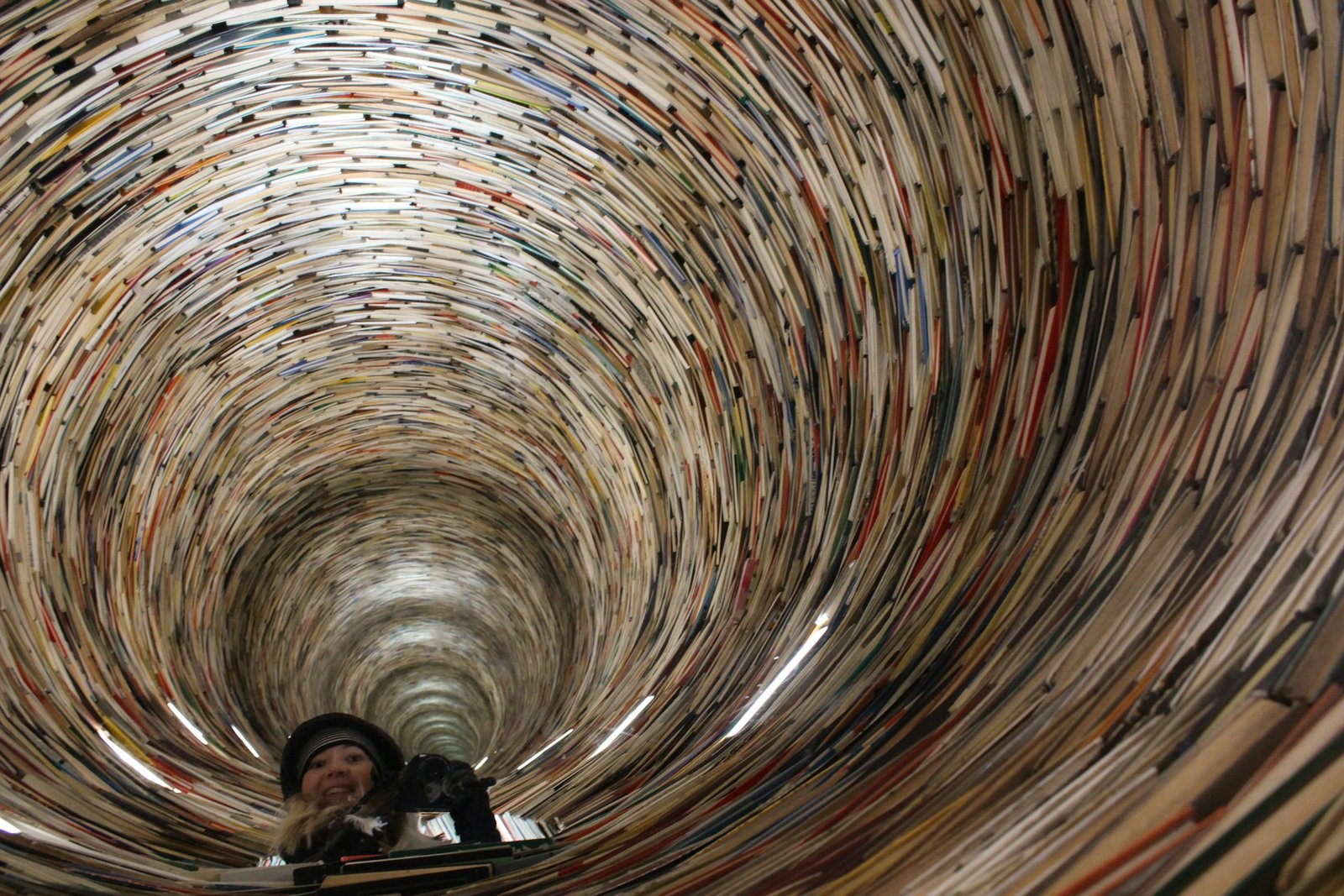
No limit
I can attest that certain books have literally transported me, stimulated my imagination, opened up vast fields of reflection and wonder, and left a lasting impression on me: L'Ecume des jours, L'Automne à Pékin, La Métamorphose, Le Procès, Dune, Le Monde selon Garp, L'Oeuvre de Dieu la part du diable, Simetierre, and many others. Authors such as Vian, Kafka, Herbert, Stephen King, and K. Dick have captivated me for hours, even days. I'm like everyone else: when I'm hooked, I can't put the book down and I can spend the whole night reading. And I love long sagas.
This may seem paradoxical to someone for whom reading does not generate any images, but, in fact, I do not find in films what these books have brought me. The imagery conveyed by the film overlaps with what I felt, my thoughts, my daydreams, and rarely juxtaposes them. I often find myself stuck in these flat images, which bear no relation to the depth that the novel had taken on in my mind. Once again, I'm not talking about images but thoughts, feelings, sensations, a change of scenery, as if, and I'm convinced of this somewhere, the absence of mental images increased the scope and depth of the story tenfold. For me, the images in the film are more of a constraint, a brake, a straitjacket imprisoning my imagination, than an aid to visualizing what the book was about.

The film “L'écume des jours” (Froth of Days), for example, seems to me to completely miss the depth of the book and get lost in an Amélie Poulain-style aestheticism, while overemphasizing the absurdity of the novel and not enough on the love between the two heroes. The first Dune (I haven't seen the latest version) with Sting playing the villain (!) is enough to make you sob, and the cyberpunk aesthetic of the spaceships is not at all what I had imagined, even though I can't describe it myself, and even though Herbert apparently collaborated on Lynch's film. But I know that's not what it was: here it seems minor, almost pathetic. What would have been tolerable in an adaptation of Jules Verne seems completely out of place here. The Voice of the Bene Gesserit sounds fake, like something out of Star Wars. Once again, what's good for Darth Vader isn't good for Lady Jessica. I'll stop there because, in any case, I have no alternative to offer. On the other hand, the worms (and here I also saw a trailer for the new film), the way of calling them, climbing on them and then riding them, made the process more tangible in my mind. Curious, isn't it?
In short, for me, not having mental images takes your mind way further when you're reading, even though I don't really have a way to share the details of this personal experience. It's the feeling (when the book carries you away, I should point out) of being completely connected with the story and its author. I wouldn't say it's like living it, but rather being in the middle of a network whose nodes connect with each other and with your mind without being limited by any kind of visualization. I have everything around me: the characters, their personalities, their relationships, the situations, the dialogues, the narrative thread, the developments of all these things, plus many other elements. I can't see them, but they are definitely there. And all of this connects, rearranges itself, and moves around me as I read. I realize that this description doesn't even begin to express a hundredth of what goes on in my head when a book captivates me. It's much more than all of this, but I don't have the words. Sorry.
Inner Richness
Afterwards, it seems that it's not the same for everyone: from the testimonials I've seen, read, and heard, one of the aphantastics even said he had no interest in reading. This came to him at a young age, because he didn't see the point of reading words lined up one after the other. It meant absolutely nothing to him, didn't trigger any internal response. He also explained that video games had replaced books as a source of inspiration for his imagination, to the point that he later became a specialist on YouTube. But most other testimonials explain, as mine does, that reading without forming mental images in no way prevents you from enjoying literature, traveling through it, losing yourself in it, and revelling in it. I also see a generational difference: as a child, only books had this power of escape in my eyes, while he lived his childhood at the time of the explosion of Nintendo and other consoles.
All this to say that the absence of mental images is by no means an absence of imagination. It leads to a different kind of imagination, most likely just as rich, but different... Incidentally, when I read a political or social essay, I frankly prefer that no images pollute my thinking. But that's another subject altogether.
To be continued...
P.S.
One last thing: yes, when I read, I have an inner voice that reads too. It stays in the background, neutral, without tone, or just occasionally, but not too much, just enough. It doesn't exclaim, it doesn't climb the curtains when it reads a question, it doesn't dress up to interpret this or that dialogue. It never disturbs me in my reading. Over my shoulder, it reads the same thing as me, at the same time as me, without bothering me, ready to correct me if I make a mistake. It's a kind of reading companion that makes a point of being discreet, of not imposing a tone or inflections on me, of not influencing me in any way. I also have her when I write, and then she becomes a little more expressive: she interprets my punctuation and allows me to judge its relevance, she rereads my text as many times as I do myself. I can never thank her enough for all this work, as thankless as it is necessary.
Go further
A video (in English) featuring several testimonials from aphantastics about their relationship with reading and raising other questions that I am not yet able to address.

