
Here, those who have looked into this a bit will find some familiar stuff and some less obvious things. It's one of the questions I'm usually asked: “But still, you're dreaming, right?” Well, yeah...
So, what are your dreams like?
It's not that simple... Like many other aphantastics, I know that I dream. I also know (well, let's say I'm convinced, plus I have a few bits and pieces (scraps?) of “evidence”) that things happen in these dreams, a bit like in a movie, and that they are in color. As far as I can remember (I can't really), everything is pretty clear while I'm dreaming. Yes, but here's the thing: I've always been unable to remember anything. Unable to recall any image whatsoever. I wake up and poof! Nothing is accessible anymore, neither the story nor the images. All I'm left with, very exceptionally (about one dream in... 100? 500? 1,000?), is a general feeling: it was pleasant or unpleasant, or crazy. Maybe in two or three dreams in my life, I remember the general theme. In one, a watch that my mother had just given me for my 7th birthday was lost. In another, 8 or 9 years later, I was trying to drive my little brother to school on a yellow moped and we never made it to our destination. Exciting, isn't it? Once again, I have no details, no images, and I don't have anything more recent in store. For me, nights are black holes of well-being and warmth. I love sleeping.
I realized very early on that I had no memory of my dreams. Ever! Or if I did, it was only for half a second when I woke up, and then poof! Gone! It might seem frustrating at first glance, but ultimately, I'm quite happy about it. My partner, some friends, and others I don't know but whose stories I've been reading/watching, are often really affected by what they dream about, especially nightmares, and it impacts their day. They're stuck in the emotions they felt (anger, fear, horror, disgust). At best, it ruins their breakfast; at worst, it haunts them for several days. Some even dread going to bed, fearing they will have or repeat horrible and distressing dreams. Meanwhile, I never have the same dream twice, and if I do, I don't know it, which makes no difference. I go to bed when I'm tired, lie down, and nine times out of ten, I'm fast asleep within ten minutes. That's one of the advantages.
Wakefulness and sleep
How can we explain this paradox: the absence of voluntary mental imagery while awake and the presence of rich and detailed images during dreams? Although nothing has been conclusively proven, there are some leads. First, scientists distinguish between voluntary mental imagery (while awake) and involuntary mental imagery (while asleep). For aphantasics, they've noticed that the visual cortex doesn't activate (or activates very little) when they try to “see” something mentally. Their mechanism for generating mental images “on demand” seems to be disconnected. The two areas responsible for this are unable to communicate. Basically, the projector probably works, but its light never reaches the screen. 😉
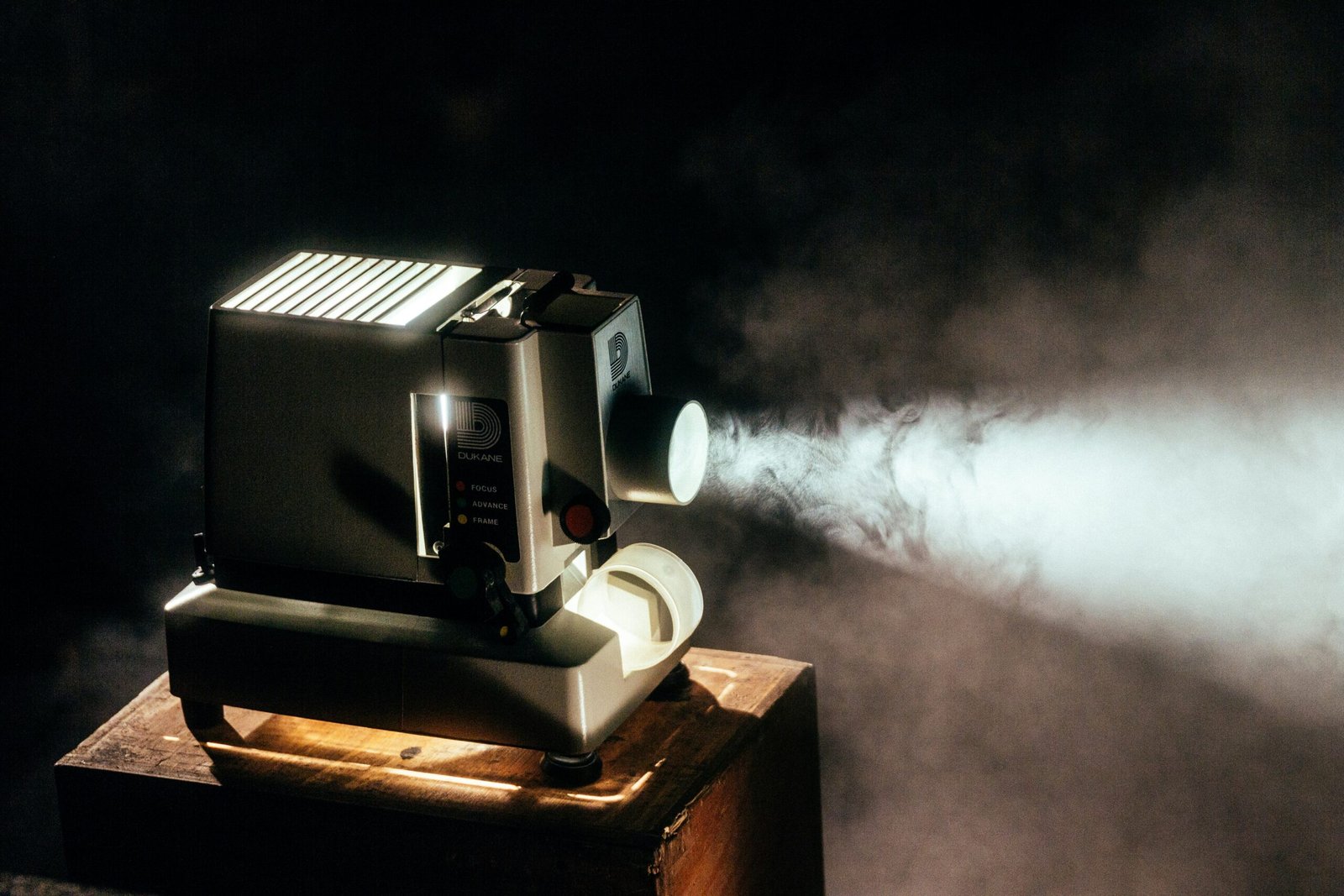
During sleep, however, the brain automatically and spontaneously generates images without conscious effort, and these images are visualized through other channels. Dreams therefore engage distinct neural networks, particularly those related to memory, emotions, and the consolidation of experiences. These networks may bypass the pathways used for voluntary mental imagery. Aphantasia could thus specifically affect the brain pathways responsible for voluntary visualization, while the mechanisms for generating images during sleep remain unaffected. There are other more advanced theories, but this is the only one I really understand.
Wait a minute, wait a minute, but... what?
At that point, I felt pretty confident, but then this beautiful house of cards collapsed just from reading a post on Aphantasia Network asking this question:
I think some aphants have decided that, since memories are based on what we see, hear, or do, and dreams resemble memories when we wake up, we must therefore imagine images while we sleep. But if that's the case, how can I tell whether it's an image or just a memory?
Aaaaah, that guy ! I was calm, I felt comfortable, I thought I had covered all the bases, and then this dude makes me doubt myself: since I can't recall these images when I'm awake, how can I be sure they actually existed? That they aren't, like my memories, a simple compilation of data and not actual images... How can I know if the yellow moped was in front of my eyes or if it was just the idea of a yellow moped that I was riding?
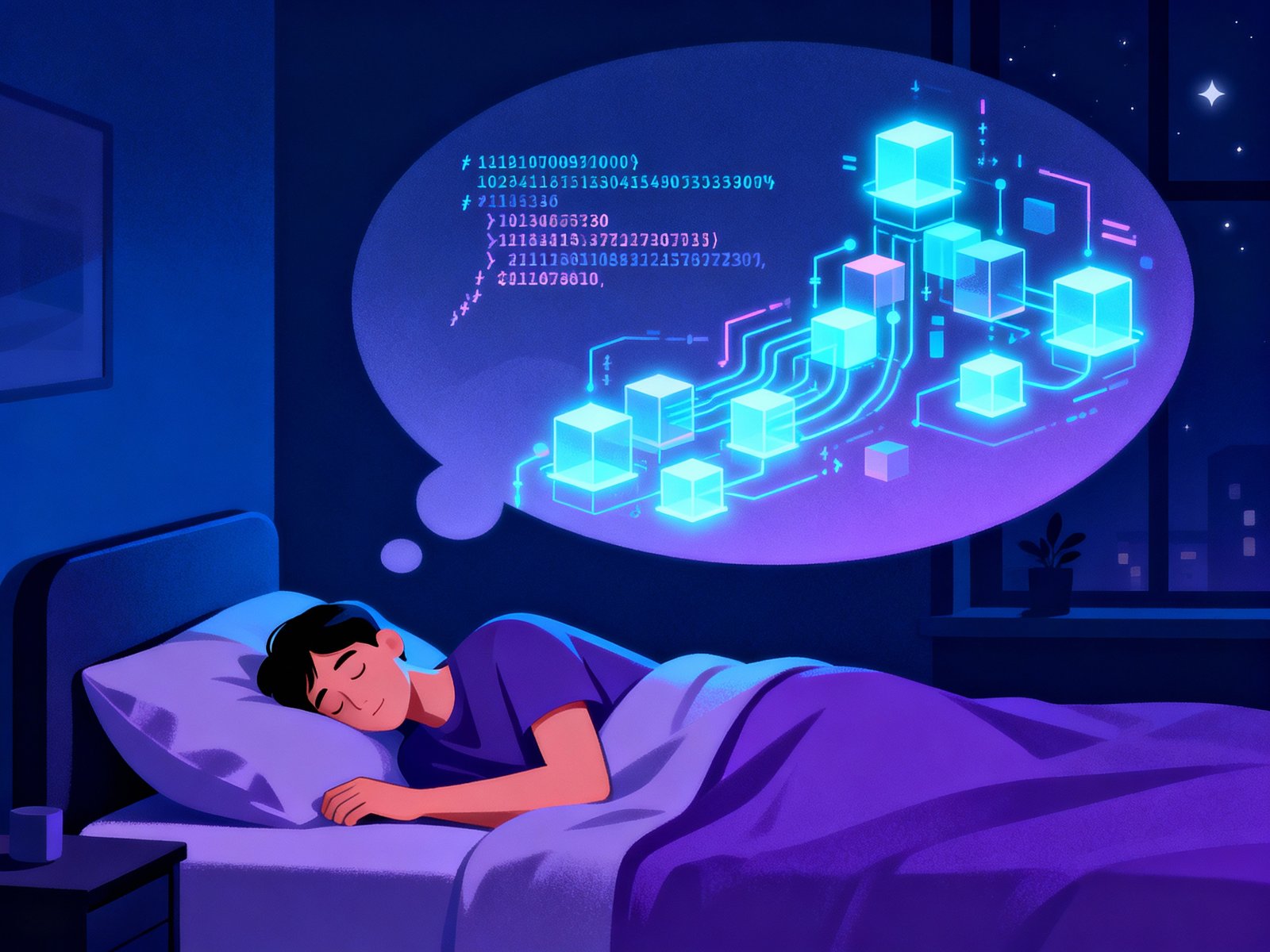
Worse still: the night after reading this post, I was woken up by a loud noise. Half asleep, I realized I was dreaming. Like a hand feeling sand slipping through its fingers, my mind tried to hold on to a few grains. These grains of dreams told me that I was reliving a situation from my youth. Which one? No idea! But I know that I was reliving it with someone I didn't know at the time. Who? No idea! But the feeling of a gross anachronism remains very present. So, still half asleep, I make one last effort to see an image of the person I was with, and of course... Nothing! Absolutely nothing... In the morning, thinking back on it all, I concluded that, ultimately, there is as much chance of me dreaming in clear, colorful images as there is of me dreaming as I “imagine” when awake: with just compilations of all kinds of data but no images. The only way I could find out for sure would be to sleep with electrodes on my head. I'll pass...
Yet another spectrum
As with voluntarily generated mental images, there is also a whole spectrum of nuances for dreams in aphantasics. Some, like me, are fairly certain (well, I am, at least, although less and less so) that they dream in color, others think they dream in black and white, others still dream in “gradient mode” (incomplete images, or fragments, blurred images, etc.), and some even know that they dream without images, just as when they are awake. The last category, which is extremely rare, claims not to dream at all, ever... We can assume that not only do they not remember their dreams, but they don't even remember having dreamed. But maybe they don't dream at all, who knows?
Anyway, that's it for dreams as far as I'm concerned. The further I go in my exploration, the less certain I become about anything and the more amazed I am by the number of different ways humans can perceive the world. Did you say reality? Hmm...
To be continued...

