
The other day, I saw a Facebook post about Manon Aubry (a Member of the European Parliament from the LFI party) proposing to ban billionaires, along with a few comments that were more or less relevant but generally tried to stay on topic. Then I saw another one, and then more, and still more, accompanied by a barrage of vulgar, insulting comments—full of disgusting misogyny but, above all, crass stupidity and a glaring lack of thought.
At first, I tried to engage in a discussion on the first post—something I didn’t even attempt on the others because, well… shit splatters! I should point out that I’m not exactly the biggest fan of Manon Aubry or LFI. But I like even less people who wear their stupidity like a badge of honor and wave their ignorance like a banner, safely hidden behind their keyboards.
Scale
So let me address the vocabulary issue right away. If she really said it that way, it’s both clumsy—since we all know that in France, since 1968, “It is forbidden to forbid”—and clever, since everyone is talking about it. Beyond the quip, the French don’t like bans, even though they have to put up with a few more with each passing year. So yes, the wording is what it is, but the idea, at its core, is worth considering.
Most of us have no mental concept of what a billionaire is or what a billion represents. And that’s normal—we’re not even millionaires! Far from it. Let’s lay things out on the table: the median salary in France is 2,200 euros. With a billion, you could pay someone earning the median salary for 37,878 years and change. Okay, since it’s a salary, you have to add in social security contributions (both the employee’s and the infamous employer’s “burdens”); even with those added, you could still pay that person 2,200 euros net for about 20,800 years. Does that make it clearer? Can you better see the gap, the chasm, the abyss that separates us from these billionaires?
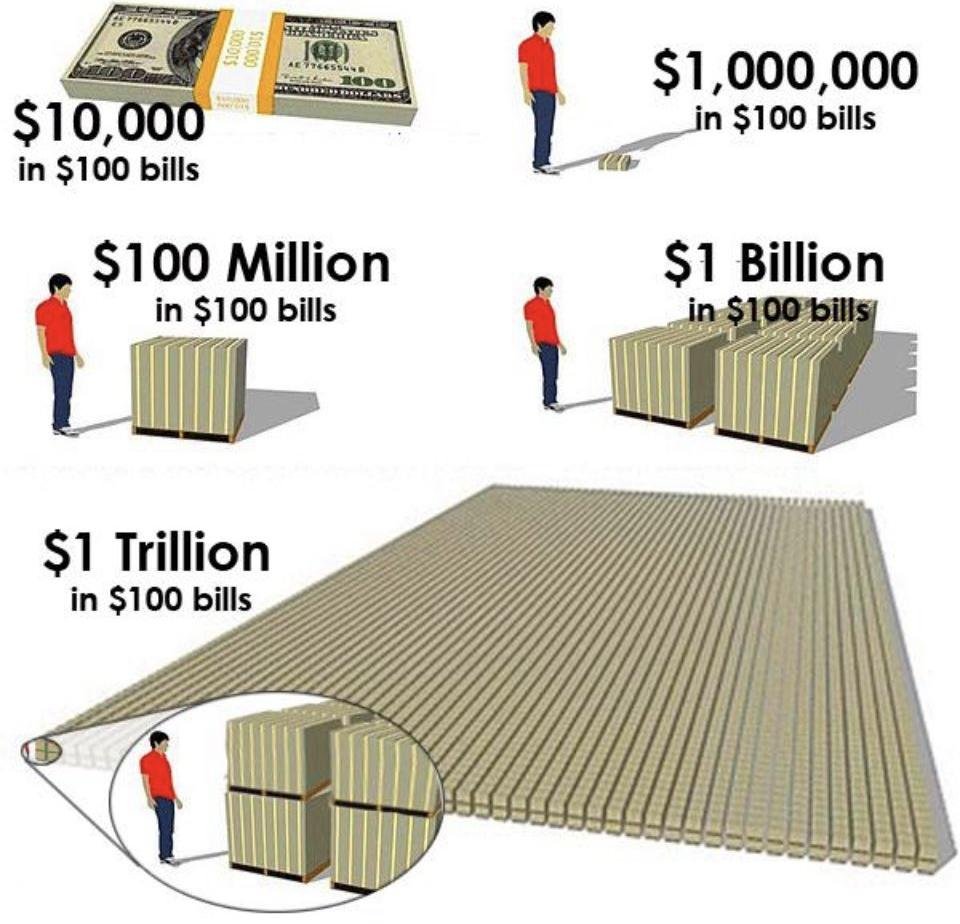
To look at it another way: when a guy wins 200 million euros from the Euromillions lottery, it makes headlines, and everyone agrees that—if he’s not an idiot—he’ll be able to set his parents, his brothers and sisters, in short, his family and his descendants, up for life for several generations. Well, a billion is five times that amount. So if we decided that no one could have more than 999,999,999 euros (well, yeah, a billion is a thousand million) in personal wealth, do you really think these people would be worthy of pity? Do you really think it’s worth defending them on social media? Do you really think these “poor rich people” aren’t protected enough? Do you really think they give a damn about you and your comments praising them? These people are in a different world; they don’t live in the same world as you, don’t share your interests, and don’t even acknowledge your existence—you’re their NPCs (Non-Player Characters in video games), mere extras in their universe.
And it's normal, it's human. Until it becomes... inhumane. As I write these lines, Musk is worth $1 trillion, Larry Page (Google) $260 billion, Bezos (Amazon) $224 billion, Zuckerberg (Meta) $222 billion, Larry Ellison (Oracle) $190 billion, Bernard Arnault (LVMH) 150 billion (in euros), ThielPalantir 28 billion and Bolloré 10 billion (in euros). And I’m leaving out a whole bunch of others—in the U.S. as well as in France—and I’m not even counting the other European countries, the Chinese, the Russians (Putin foremost among them), or the fortunes of the kings and princes of the Middle East.
Hello?
I should point out that I didn't go into as much detail in my first comment on the Facebook post, but at this point, I've received my first couple of responses:
“Okay, I get your point. But it’s the principle that bothers me. Banning people is weird.”
“So you see, I’m in favor of banning the poor. To each his own. I’ll never understand this obsession with wanting to make the rich poorer.”
On the first point, while we’re debating the term “ban,” I note that billionaires, for their part, don’t restrict themselves in any way: Musk is trying to influence every European election; he’s filling space around the globe with thousands of satellites; he has built—and plans to build more—monstrous data centers that are already illegally polluting the air (with gas turbines) and will consume vast amounts of one of life’s most essential resources: water. He and his buddies Peter Thiel, Larry Ellison, plus KarpAltman, Fink and others advocate a mass surveillance society, Chinese-style, where the citizen "behaves well" because he knows he is supervised and kept on a tight economic leash. And it’s precisely because they have the billions needed that this techno-totalitarian madness is even possible. We could make fun of their ideas when there were only two or three of them, but now it’s not so funny anymore.
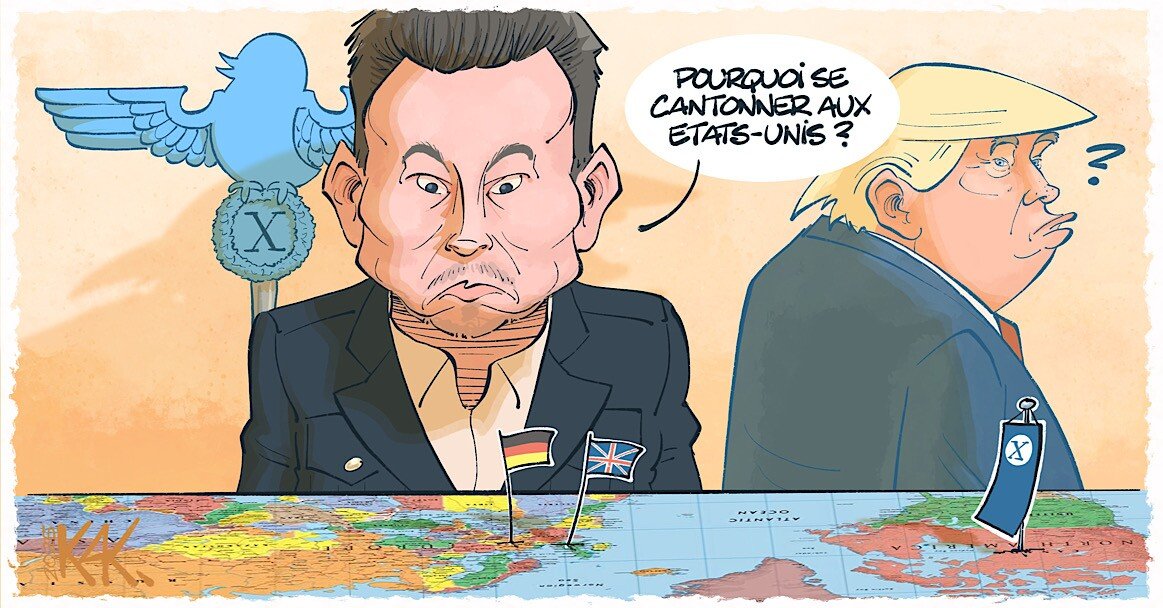
Now, point 2: so there’s no obsession with “impoverishing the rich,” but it’s very clear that we’ve reached dangerous levels of wealth. If the examples of Musk and Thiel in the U.S., and Bolloré, Sternin, and Bernard Arnault in France aren’t enough to make you understand that these people are endangering our political systems, our natural resources, and even our most basic, everyday freedoms—the right to go wherever you want without anyone knowing, the right to click on a link or have a conversation with a friend without immediately being flooded with ads and emails related to what you’ve said or done, etc., the right not to be tracked, filmed, or spied on constantly—to be a citizen first and not a consumer). Look for these people’s comments in various forums, TV shows, and so on. Billionaires aren’t just successful neighbors; they are powerful figures whose interests are rarely aligned with those of the general public or the common good.
Paranoid?
As a result I have a new answer from the second guy:
“We need to stop being paranoid. And, all things considered, maybe it would be better to be led by business leaders or captains of industry than by people who’ve never worked a day in their lives—which is the case for most politicians. When I see a guy like Bardella on the verge of power, even though his professional experience amounts to nothing more than a one-week internship at the end of 9th grade, it gives me the chills.”
This touches on a crucial point—just like with the billions, the reality of which is hard to grasp. What these billionaire-rich people are doing, the plans they have in mind, and the consequences this has on the planet and on our lives are so enormous, so inconceivable, that it’s hard to believe. We have our doubts. It’s happened to me too—as I’ve already written in this blog—and we wonder if we’re turning into conspiracy theorists. But no! This isn’t paranoia! It’s a fact!! All of this is all the more verifiable that It's been said and written openly. They don't even bother to hide because they think they no longer need to, given the leverage they have.
So, no, having CEOs at the helm of the society would be (and already is) a disaster. That’s the world they dream of Curtis Yarvin, Peter Thiel, and a few other crazy people. This is what’s called techno-feudalism: microstates, each run by and/or centered around a multinational corporation—preferably a monopoly—that would enact its own laws, have its own police force or private army, as well as its own servants (you and me). If you don’t believe me, read the books by these two: the first is primarily an ideologue; the second is one of tech’s biggest fortunes, a Trump supporter since 2016, and the founder of Palantir—a company that works with all the three-letter agencies (CIA, FBI, ICE, etc.) and which European governments are only beginning to view with suspicion in 2026.
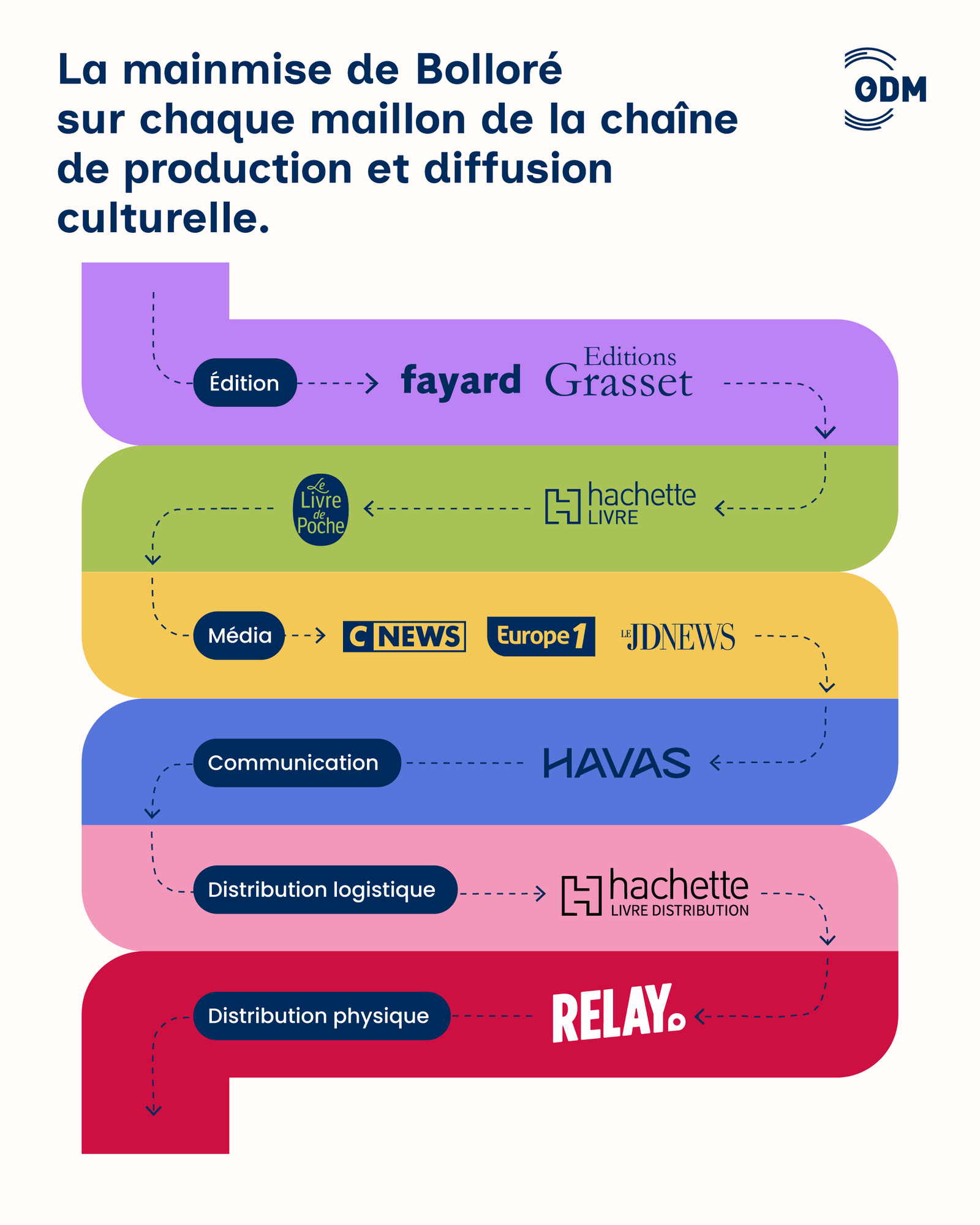
I do, however, agree with the guy on the Bardella case. But here’s the thing: who supports Bardella? Who has tailor-made books written for him—books he could never have written on his own—who publishes them (Fayard) and distributes them (Relay), thereby ensuring his promotion and providing him with a comfortable income without him even having to lift a finger? Vincent Bolloré! How curious… Who owns the magazines that sing his praises and show him on the arm of his “noble fiancée”? Bolloré Vincent! Who owns the radio stations and TV networks that regularly invite him to spout his memorized ramblings, in which every problem has—and can only have—one cause: immigration? Vincent B O L L O R E. What a happy coincidence, isn’t it? And when, by chance, it’s no longer Bolloré (e.g., *Paris Match*), it’s Bernard Arnault or Bouygues (TF1/LCI)! Watch out! One billionaire can hide another! The message is clear: surrender, you’re surrounded!
It’s clear from this last example alone that the “paranoid” argument no longer holds water. Under these circumstances, it’s even beneficial to be paranoid.
Zaydontownrealmoney in person!
Other com on the FB post:
“You really crack me up—do you think a billionaire is just the guy who has that much in his bank account(s)? You’re really out of touch. His wealth is measured in assets and businesses; he’s also the guy who provides jobs for thousands of people, unlike those idiotic congressmen who do nothing but stir up controversy and collect their huge salaries.”
So yes, politicians' salaries—and especially their spending habits—are another issue that also deserves our attention. But let's stick to billionaires, our topic for today. The first part of the speech is a classic argument we've heard a lot during the debates surrounding the Zucman tax: we can't be taxed on our equity stakes in companies, because that value represents an estimate of the company's potential growth, not money we could liquidate overnight. Okay, so let’s summarize: it’s virtual money that they don’t actually have, and if we tax them, they’ll have to sell part of their portfolio to pay those taxes. This will impact their ability to invest, and thus the growth of their companies, and will ultimately be harmful to the economy and employment.
Now let's take a look at how Musk took over Twitter. He borrowed half of the $45 billion needed by offering his shares in Tesla as collateral. So, using the same line of reasoning—that he can’t be taxed because it’s not money he actually has, etc.—he can, thanks to that very money he doesn’t actually have, raise more than 20 billion. Still don’t see the trick? If we can’t tax him based on the value of these assets, he shouldn’t be allowed to use those same assets as collateral for a loan. It’s a massive scam. Conversely, if he can do that, then we should be able to tax him. By the way, did you know that among the lenders were two French banks: Société Générale and BNP Paribas? Billionaires aren’t our friends; they don’t provide jobs to anyone—they rent our labor and thus live off the work of others. Who’s really the one getting the short end of the stick, I ask you?
I’ll skip over the same old refrains: “They’re going to leave!” and “We are taking away the fruits of their labor!” All surveys show that this affects less than 1% of this population, and that their assets, for the most part, have long since been moved elsewhere—whenever they were able to do so. As for their work. What kind of work brings in as much as a billion over a lifetime? None! So the work that produces these colossal fortunes is their money's work and yours—whether you’re their employees or their customers—not their own labor.
The “Eat-It-All”
Finally, there’s the mechanical effect of these accumulations of wealth. Because we’re not dealing here with Scrooge McDuck, who’s content to just take a dip and swim in his money. They actually use that money. Sometimes foolishly, like sending a Tesla into space, privatizing Venice for a wedding, or offering a few celebrities a ride on a space shuttle around the Earth.
Worse still, they’re shelling out millions to get us to “vote the right way” or to get this or that law passed. But there’s actually an aspect that’s even more harmful to our daily lives: after Musk and his DOGE had put quite a few Americans in a bind, after migrants were hunted down by ICE, many farmers there threw in the towel and sold their farms or their land. A company, Farmland Partners Inc.—which just happened to be passing by, purely by chance, right?—bought up a bunch of them to then lease them to other farmers, who are interchangeable since they no longer own their land. And guess who owns that company? Peter Thiel! If that doesn’t remind you of the Middle Ages…
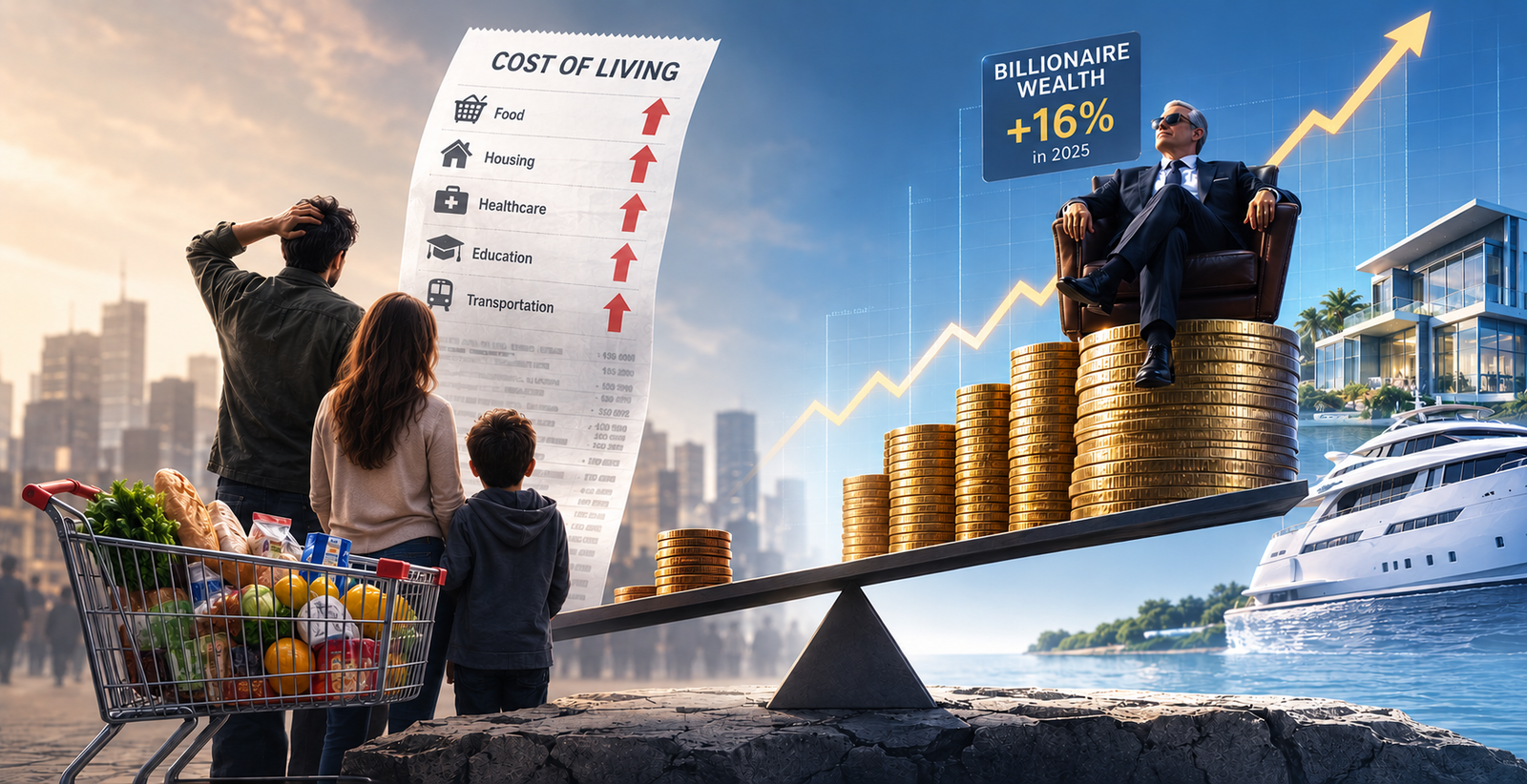
They buy up land, buildings, businesses, media outlets, and so on—simply because their money has to be reinvested, and it never occurs to them to invest it in education, the fight against poverty, or world hunger. It’s not their problem—it’s yours! On a different scale—one that’s far less extreme—this is exactly what happens when people of means take a fancy to a city or region. Prices skyrocket, both for buying and renting, and locals can no longer even rent or buy a home in their own city or the region where they were born. The same process is set in motion whenever such huge fortunes are allowed to exist: they inevitably end up taking over everything that would allow others to build their families, their homes, their peace of mind—and, by extension, their kindness, their solidarity, and their society.
In this video, Gary explains (in English; AI voices are available in various languages, including French) various topics covered in this post: what a million, a billion, and a trillion are; the difference between cash and assets; and the inevitable hoarding that all of this leads to.
We have no interest in seeing these unimaginable fortunes grow any further, because their wealth automatically impoverishes us. They will always have enough to pay more; we can’t even keep up now, so what about tomorrow… In the past, even in the U.S., there were antitrust laws that curbed this phenomenon; they have been gradually and systematically dismantled since the Reagan/Thatcher era. But reinstating them is not, as some would like us to believe, a form of spoliation of these unfortunate super-rich, but rather a protective measure for our people, our resources, and our future.
Not so dumb after all…
I don’t know what electoral motives lay behind Manon Aubry’s peremptory statement. I can certainly see how extreme the wording is, but I honestly believe that our daily lives would be safer if people were prohibited from owning or wielding more than a billion. As we’ve seen, a billion is already a considerable force to be reckoned with, and I would much prefer it if Hachette, CNews, the JDD, Europe 1, and the Relay network were not owned or controlled by a single individual. The same goes for X/Tesla/SpaceX or Facebook/Instagram/WhatsApp, etc. This is neither jealousy, as is sometimes claimed, nor a hatred of wealth or success; it would simply be a measure of public safety. Because, yes, billionaires skew the playing field in their favor, influence our lives today as never before in recent history, couldn’t care less about what might happen to the rest of humanity, nature, and the planet, and are collectively putting us all at risk.
If we were to “ban” billionaires, any earnings above 999,999,999 euros could be wisely pooled into a common fund, a sovereign wealth fund, or new investments that serve the interests of countries rather than those of a few individuals. If this were done on a global scale, do you really think we wouldn’t be better off?
Think twice before launching a crusade to defend Bernard Arnault and his fellow billionaires…
Wesh Bro!
To take it a step further
FAF40, Investigations into the Far Right and the Ultra-Wealthy
Twitter: How Is Elon Musk Financing the Acquisition of the Social Media Platform?

