
I am 65 years old and I have never been able to create an image in my head. Even when I close my eyes, I have never been able to visualize anything other than black... black and more black. I am surrounded by people who have vivid mental images, and I have only recently realized, in November 2025, that most people do not function like me.
Of course, I knew that some people could see images very clearly in their minds, but since they were all artists, painters, or architects, I thought they were an exceptional group and that there was ultimately a logical explanation: these fields, which relied heavily on the visual, inevitably attracted the few percent of people gifted with this ability. As for the others, it was obvious to me that their mental imagery was as non-existent as mine. What's more, whenever I had discussions on the subject, it was with people who were talented at drawing, photography, etc.
For me, the logic made sense: you see images in your mind, you draw them, you don't see anything, you don't draw. I've always been terrible at drawing, so it made perfect sense, no problemo.

But again, through a very human and widely shared bias, I assumed that the majority of people were like me, perceived as me. We were all more or less gifted in one or more sectors at the margin, but the essential was similar. Everyone does this and positions or positions others in relation to what they live, feel, see and hear. I'm going to consider that the untel is too emotional when he finds me a little cold and insensitive. We will both, not judge, but make an idea of the other in relation to ourselves. In short, as I mentioned in the previous post, it's a small test, followed by a discussion with my daughter and some YT videos that helped me to understand first of all that, from this point of view, it was me who was part of a separate group and not those who had mental imagery and then put a name on it: aphantasia.
This discovery is dizzying for me, but not that: for my loved ones, for the few friends with whom I speak and who did not know this thing and did not even suspect that it was possible. Vertiginous and at the same time not at all upsetting: I have lived very well for 65 years without having any idea, so of course it will realign some sliders but it does not cause me to break a cable either.
A little bit of history (quick fix)
In 1880, Francis Galton, Darwin's cousin, conducted an investigation into the vivacity of mental images, systematically questioned a large number of people about their mental representations and accuracy. During the study, he met people who had no mental image, which seemed incredible to him, because at the time (as yet) most people thought everyone had mental images. He writes his study report and mentions these cases.
From the end of the 19th century to the 1960s, behaviorism reigned supreme. Basically, we study the behavior, the reactions of people to certain stimuli to understand (and possibly manipulate) the human or animal mind ( Pavlov dog, test children and treats). Galton's work was studied without any follow-up.
A video by JamievsTheVoid that covers the topic well: being an animator and having aphantasia. French subtitles available.
Fast forward to 2005. A doctor named Adam Zeman, a professor of cognitive and behavioral neurology, studied the case of a patient who had the ability to generate mental images but lost it after heart surgery. It seems that he did a stroke during the operation and, who could evoke the faces of his relatives, children, grandchildren, only sees... black. Zeman eventually published his study and conclusions in 2010. It circulates quietly for five years in academic and scientific circles. And in 2015 the New York Times and others mediated it as well as the mental imaging disorder she was studying.
Zeman then received several testimonials from people in the same condition, but they specified that it was not the result of an accident or surgery. They had been like that since birth and, better still, they had become aware of this difference by reading articles mentioning the study. Like me, they thought they were normal and suddenly discovered that... well, no.
Thanks to this group of people, Zeman and his colleagues at the University of Exeter conduct experiments on a larger scale based on questionnaires and cognitive tests. This was the starting point for broader studies on lhephantasia. One of the members of the control group will even create Aphantasia Network to raise awareness of the phenomenon and provide resources to people with aphantasia.
So, are you happy?
As I watched the videos and read the comments, I noticed that there were three main reactions:
– the first, shared by almost all, is unbelief which also exists in the opposite direction: "How? There are people who see images in their heads?". Or, conversely, "People who do not visualize anything mentally? Does it exist? Really?". As I said, mental visualization was not a total surprise for me, since several relatives had already talked about it, but I thought it was reserved for a few happy few. Basically, I thought they were the 3 to 5% of the world's population and I was in the vast majority. On the other hand, and I will talk about it in other posts, I felt this total unbelief when I learned that others could mentally recreate tastes, smells and sensations of touch.
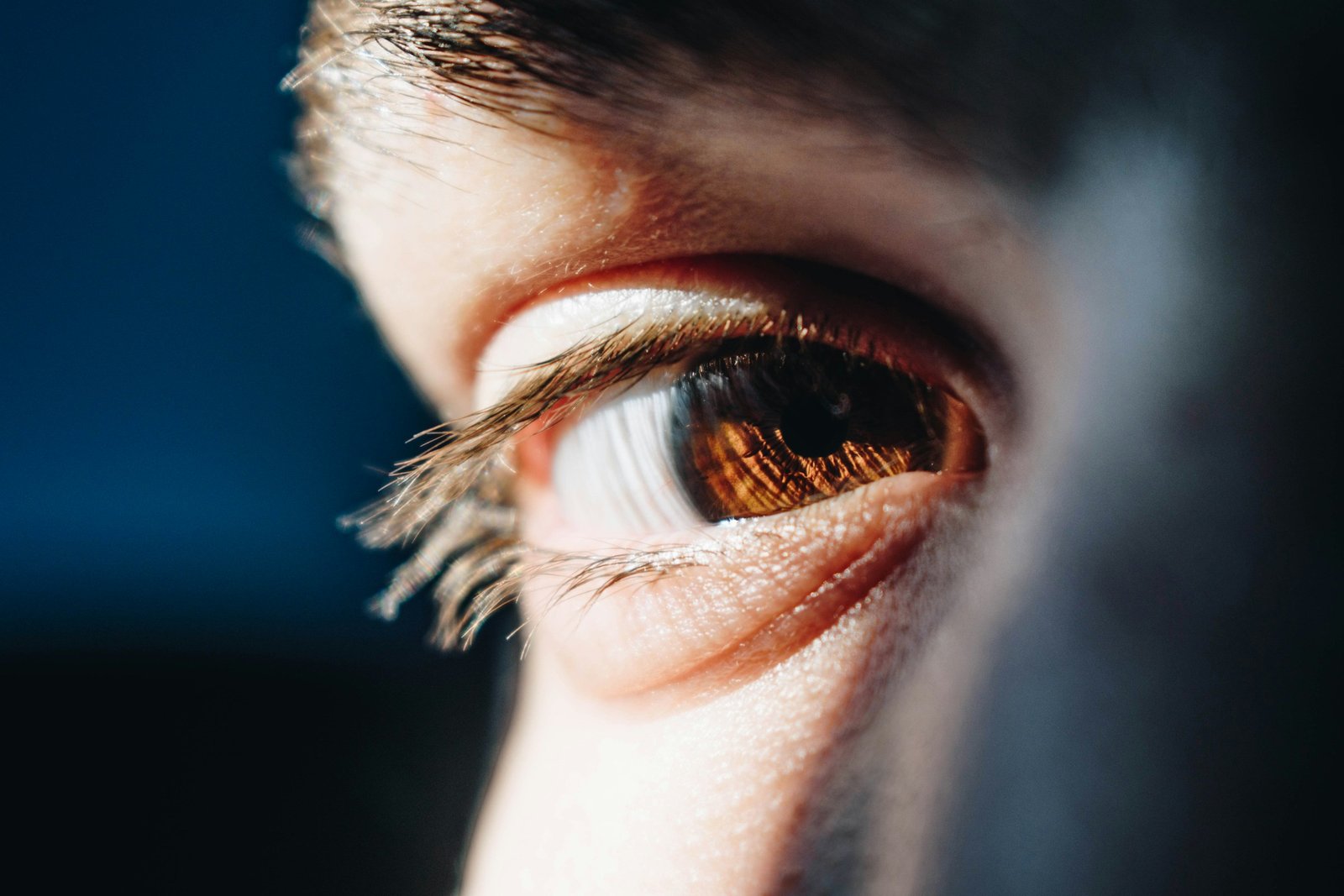
– envy, even jealousy, the discovery of a lack, the feeling of having missed something his life. If I have read and heard testimony in this direction, honestly it has not even touched me. How could I miss a skill that I have never had, without which I have lived very well for 65 years, which I could have ignored until my last breath, as I am sure it was the case with a lot of daphantas? I'll probably explain in future posts that I wouldn't even want, if we could magically equip them. Maybe if I was 20, but now... Well, it's not possible anyway, so... 😉
– The third, as crazy as it may seem, is also widely shared: in the end, it does not change the person I am, it does not fundamentally question it. Of course, we review certain things, we analyze and better understand certain aspects of our lives, our relationships with others, our learnings, our memories, and we realign them all in the light of this revelation, but, well weighed, I don't think that would have changed much. At least I imagine...
To be continued in the next posts...

