
So today we're going to talk about AI (among other things)
I’m one of those people who, even today, are amazed at how quickly we embraced computer technology in the 1980s, eventually entrusting it with just about everything—from trains to traffic lights, to airplanes, from managing the power grid to payroll, inventory, orders, and so on. It already seemed mind-boggling, given how fragile those computer systems were.

But, even better, we did the same thing all over again in the 90s with the internet. Wait and see what happens—information would flow freely along its information superhighways, knowledge would spread worldwide! We’d be able to educate ourselves, engage in dialogue, make connections, access every museum in the world, and collaborate across continents. The result? We’ve ended up with the world’s biggest superstore, we argue and insult each other without listening to one another through social media, and we scroll from videos of stupid, sponsored influencers to pictures of cute cats. Keep scrolling—I want you to!
Not to mention how scared we were at the dawn of the 2000s. Yeah, we hadn’t coded things well enough, so there was a real risk of a "catastrophalistic" glitch. Once again, we’d thrown ourselves into it headfirst without assessing the risks: poorly coded programs, potential bugs, hacking, digital warfare. And, at the same time, we’d happily handed over to the network the management of global finance, bank accounts, health data, and sometimes even the management of votes. You have to admit, that’s a bit stupid… Right?

And here we go again, falling back into the same old rut with AI. Everyone’s jumping on the bandwagon (myself included—how do you think I’m translating this website?). Now, not only can you post a photo of your cat, but you can make it play soccer, go skydiving, or pose on the summit of Everest. And if you don’t have a cat, AI will whip up a virtual one for you—super cute and it even talks. At work, are you sick of writing meeting minutes? Record the meeting, and AI will draft your minutes in five seconds—and sometimes better than you. Too lazy to look up some information? AI! Want to write a short story or a love letter? AI!! Want to redecorate your home? Find out what you can cook with what’s in your fridge? Build a website without knowing a thing about it? AI!!! AI!!!! AI!!!!!
Once again, we’re taking the easy way out, settling for a quick but shoddy job, all in the name of efficiency and convenience. But let’s not forget that, comfort makes you stupid, making us dependent and turning us into servile slaves. So yes, some voices are still speaking out against the disappearance of a whole range of jobs, but the response they get is: sure, but it creates new ones. Some are alarmed by the environmental consequences of the proliferation of server farms, particularly regarding water resources (for cooling); they are lulled into complacency with promises of technological improvements and the use of renewable energy. And then, there are those who worry about the advent of the Singularity—this AI that will become self-aware, develop on its own, take control of networks, and eventually render us useless and, at worst, exterminate us, Terminator-style. In this case, the responses range from “Oh, come on, that’s just paranoia…” to “We’ll see when the time comes…” . Nothing very satisfying because, in reality, we don’t know whether or not we should fear that this will happen. If so, we have no idea when it might happen or if we’ll be able to handle it. In these cases, the consensus is to sidestep the issue… and sweep it under the rug
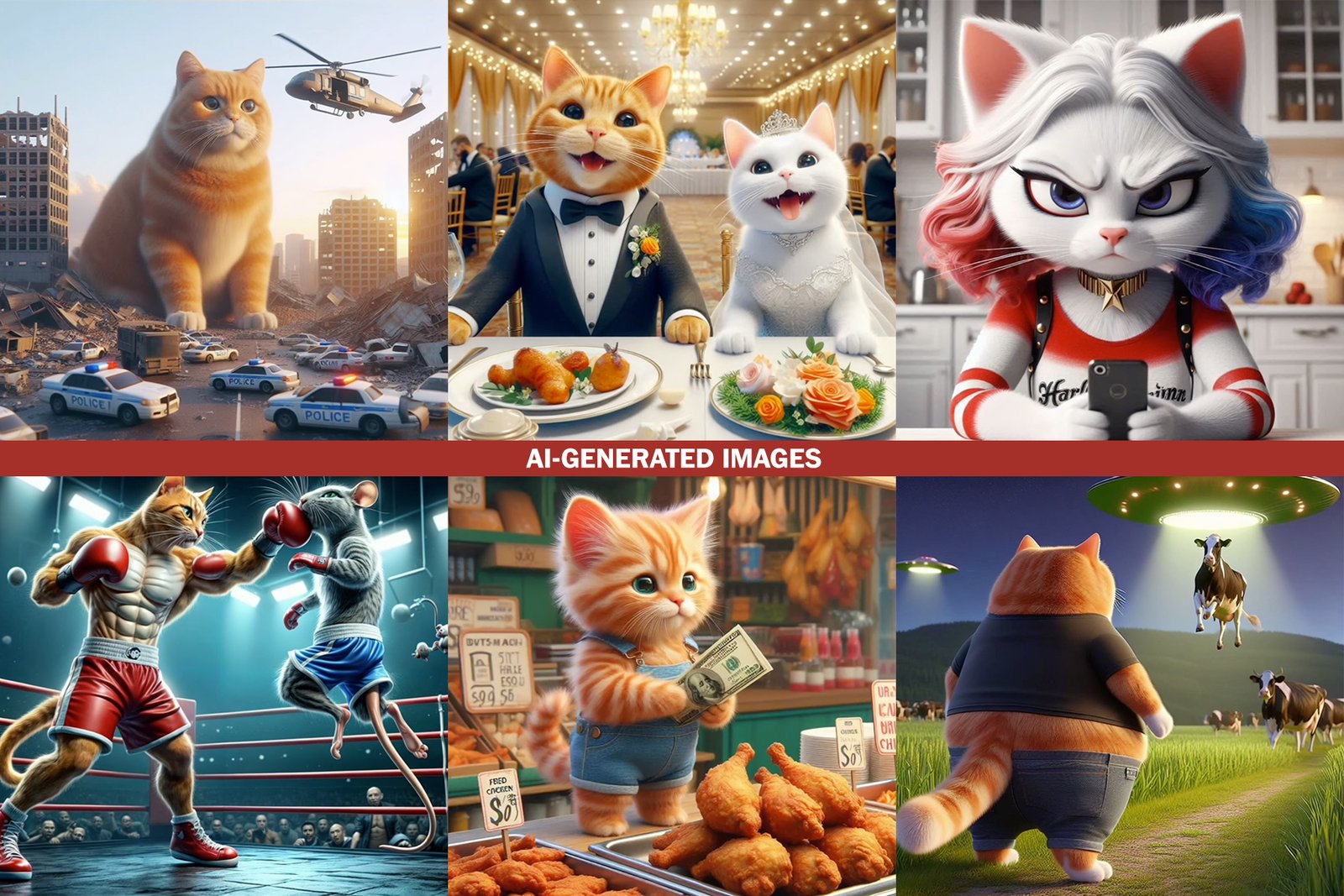
Finally, knowing all this, some people ask themselves: “What’s the point of investing all those billions in a risky technology that destroys jobs, harms the environment, and isn’t particularly profitable at the moment? “What drives all these people to put mountains of cash on the table just so we can post cute cats videos or generate a new Beatles song that’s as tasteless as can be? Spoiler: AI isn’t here for your little cat videos, your memes, your watered-down art, or even to help you at work or manage your daily life. For those who fund and develop it (almost all private interests…), AI is simply the most powerful tool for control and surveillance ever created.
KKKontroll !!!
At the heart of it all lies data—the very data we hear so much about. Before the internet, data was collected, stored, and used in silos. That is to say, each entity—tax authorities, social security, employers, supermarkets, various government agencies, and so on—held data on each of us related to their respective areas of responsibility and were not supposed to cross-reference it, or if they did, only within a supposedly restrictive legal framework.
Ever since the advent of online shopping, online banking, forums, emails, and so on, each of us has unwittingly contributed even more to feeding these databases—whether out of necessity or because it was fast, convenient, and easy. This trend has accelerated and become widespread with the adoption of smartphones, which, moreover, send our data all over the place, make us traceable, and expose us to the world—along with our tastes, opinions, and habits—without us even realizing it. And the worst part is that we eagerly contribute to this through social media, messaging apps, loyalty programs, our daily web browsing, and our interactions with various AI systems.
Similarly, some people have spoken out, expressing concern about this rampant and systematic invasion of our privacy. I remember that around 2015, we were told that the NSA was listening to everything, monitoring everything that was exchanged—phone calls, text messages, emails, social media posts. And I remember the most common reaction, both among ordinary people and among “media experts”: “Oh, they can do whatever they want; the volume of data is so enormous that they’ll never have enough people to analyze it all.” Not to mention the endless and utterly idiotic: “Well, I don’t care; I’ve got nothing to hide anyway.”

Well, now they do have these analytical tools, thanks to AI. We’ve moved to an industrial scale, and it’s been fully operational for quite some time now, with the social credit system in China, the facial recognition of the Paris 2024 Olympics, the repression of ICE assisted by Palantir, etc.
All those in power are pushing for it in the name of order, security, and stability—in the style of *Brave New World*. It has even been theorized by the dubious yet harmful Curtis Yarvin (aka Mencius Moldbug), one of the “thinkers” behind this movement. A brave new world, with its patchwork of microstates ruled by sovereigns/CEOs. With societies divided into castes, based on each person’s economic utility, and outcasts whom Yarvin envisions herding into social rehabilitation camps—even joking that there’s no point in eliminating them anymore, since all it would take is to strap them into VR headsets and let them live in a virtual universe. All citizens would be sorted by AI using data collected from every possible service and social network to establish this new social hierarchy. Sounds appealing, doesn’t it?

I don't know if it will ever come to that, but it's almost certain that, soon, the differences between democracies, illiberal democracies (stupid language), authoritarian regimes, and dictatorships will boil down to details, appearances, and pretense, since all our leaders dream of societies where everyone behaves properly, where dissenters are marginalized, where workers shut up, where you can cut off benefits to any citizen with a single click. All of this is moving forward patiently and methodically, and history will remember that, in the meantime, we kept posting videos of unicorns playing soccer. By the way, I wonder: how do they kick the ball with their heads?
The (new?) order arises from the chaos said...
Regular readers of this blog were probably expecting posts about Iran or the 2026 municipal elections in France, the National Front, and so on. Well, that’s exactly what I’m talking about here. All these tech bros agree on one thing: no one will vote for their agenda with full knowledge of the facts. On the other hand, a long period of chaos would allow them to impose their views without our consent, under the pretext of restoring order and security. This is made even easier because all this technological power already allows them to influence our lives, our choices, and our votes.
So the current mess in the Middle East plays right into their hands. They’re joined, by the way, by those morons known as “Christian Bros” (the bigoted U.S. far right), who see this as the beginning of the Apocalypse and the return of Jesus (I know, it sounds totally crazy).
This also explains why Tech Bros support all far-right parties and movements—especially the most incompetent ones. It’s a surefire bet, because, aside from ideological affinity, once elected, these leaders will either rush to adopt their products for the purposes of maintaining order and control over populations and migrants, or they’ll fail miserably, thereby contributing to the prevailing chaos and fueling the average citizen’s demand for order and security. Win-win situation.

There you go—if you were still wondering why these people amass such colossal fortunes, well, there’s your answer. And regardless of our differences—our political views, religious beliefs, and so on—I don’t think this is OUR PROJEEEEEECT! (Macron 2017 style :-) )
Wesh Bro!
For further information:
An interesting video (in English and French (AI voice)) that raises several points about how AI companies view things.

